
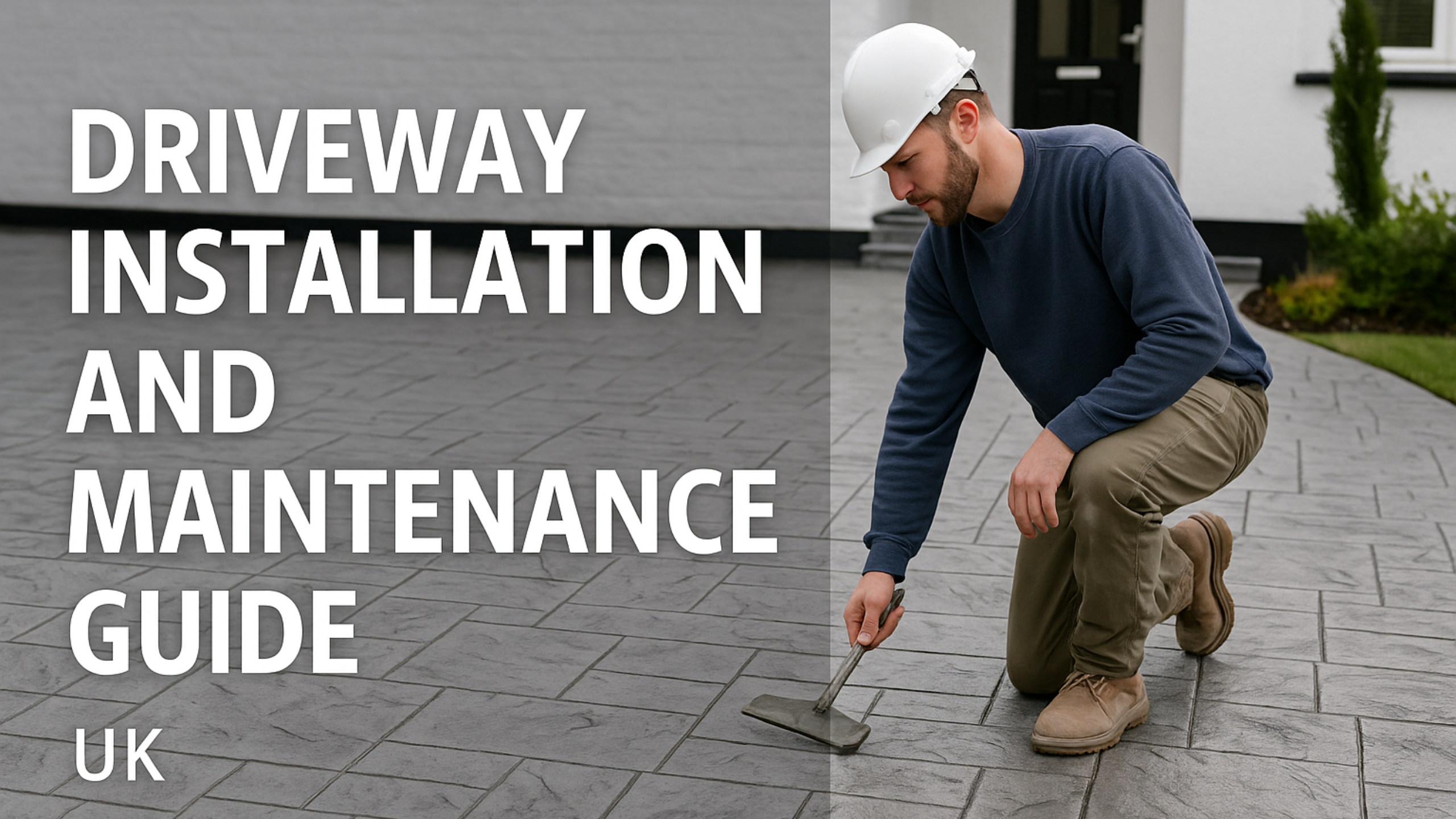
If you’re considering driveway installation and maintenance for your home, it’s essential to understand the basics. From the materials you should choose and whether you require planning permission, what options for drainage and the best way to maintain it, this blog will provide all you should know in simple and easy to understand terminology.
Materials: Types of Driveways, Pros, Cons & Costs
Choosing the right surface for driveway installation and maintenance is among the most crucial decisions. Every option has its advantages and drawbacks. Here’s a list of the most popular types used throughout the UK:
1. Tarmac Driveways
Advantages: Cost-effective, sturdy and simple to install. It is ideal for areas with a lot of traffic.
Cons: Can soften in hot weather. Requires sealing every few years to ensure it stays new.
Average Cost: £40–£70 per m²
2. Resin Bound Driveways
Benefits: A very attractive, contemporary look. Surface is perfectly smooth, permeable, and easy to maintain.
Con: Must be installed by professionals. If a resin with a UV stability that isn’t stable is used, then the color could fade.
Average Cost: £60–£90 per m²
3. Block Paving
Advantages: It looks great and is available in a variety of styles. It is easy to repair – just remove the damaged block and replace it.
Pros: Weeds can grow between the blocks. Requires frequent brushing and resanding.
Average Cost: £70–£120 per m²
4. Gravel Driveways
Pros: Cheapest option. Installation is simple. Great drainage.
Cons: Stones can move around. It is not ideal for a slope. The slope needs to be topped up and swept often.
Average Cost: £30–£50 per m²
5. Imprint Concrete Driveways
Advantages: Patterns that can be customized to look like bricks or stones. Clean and durable.
Cons: Can crack over time. Patching repairs may not match completely.
Average Cost: £60–£100 per m²
Planning Permission & Regulations
You might be wondering if you require planning permission to build your new driveway. In most cases it will not be especially in case of driveways that allow rainwater to soak into the ground.
When You DON’T Need Permission:
If your drive is constructed out of permeable material such as resin bound stone or gravel.
If water drains into flower beds or lawns nearby.
When You DO Need Permission:
If you are planning to cover more than 5 square meters in your front yard using impermeable materials (like asphalt or concrete) without drainage.
When your house is listed structure or is located in a Conservation area.
SuDS – What’s That?
SuDS is a shorthand for Sustainable Drainage Systems. These systems are used to control surface water to avoid pollution and flooding. Councils promote driveways that adhere to SuDS regulations, including:
Using porous surfaces
By adding soakaways, gravel trenches, or even gravel
The driveways are sloping so that the water runs into the lawns or down drains
Always consult your local planning department before making any decisions about your project.
Drainage: Why It’s So Important
Insufficient drainage is a common issue with driveways, which can cause water to pool and damage the driveway, leading to cracks or even foundation damage. Here’s how to stop it:
Good Drainage Options:
Permeable roads: Gravel or resin bound surfaces, which permit water to seep through.
Channel drains: They take rainwater and then transport it to a sewer or soakaway.
Sloped driveways: Slight slopes may help drain the water from your property.
The lack of planning for drainage can cost you more repairs later on, so it’s worthwhile to do it from the beginning.=
Driveway Installation and Maintenance Tips
Best Time to Install a Driveway
The best seasons for driveway installation and maintenance are spring and autumn. The seasons of these are typically dry and not very hot, which allows the material to be set properly. Winter can be cold and could delay the process.
Simple Maintenance Tips:
Clean up regularly: Use the broom or jet washer to remove dirt, leaves, and moss.
Cover the concrete surface: for tarmac and stamped concrete. Sealing will help to protect the surface from weather and stains.
The control of weeds: Get rid of weeds early, before they grow. Use weed killer for block paving gaps.
Verify for damage: Repair tiny cracks and dips before they become worse.
Clear drains: Be sure that your gullies and channels aren’t obstructed by debris or leaves.
Final Thoughts
Investing in proper driveway installation and maintenance adds value to your home while improving its curb appeal and function. It enhances the appearance of your property and offers an extremely durable, long-lasting surface that you can use day-to-day. It’s more than appearances. You must also follow the correct guidelines, consider water drainage, and ensure it stays in good order with simple maintenance.
If you like the classic design of block paving or the smooth look of resin or the dependable performance of asphalt, there’s a solution for everyone’s budget and preference.
For professional driveway installation and maintenance in Leeds, Bradford, and nearby areas, trust A Class Driveways. We offer expert advice, quality materials, and reliable workmanship.